


















Trust is the unseen asset on which material success depends.

We help organisations and governments operationalise trustworthiness as a strategic asset.

“By 2030, we see +1 million organisational leaders better equipped with trust-based capabilities, and +1 billion lives impacted.”

Trust is the unseen asset on which material success depends.

We help organisations and governments operationalise trustworthiness as a strategic asset

“By 2030, we see +1 million organisational leaders better equipped with trust-based capabilities, and +1 billion lives impacted.”

01

Why


Why


Trust and performance are tightly linked.

Most organisations know trust matters. Few know how to work with it. Trust is treated as culture or intent, while performance is measured and managed as if separate. They are not.

Trust is the outcome. Trustworthiness is the work.

Trustworthiness shapes how strategy is understood, how authority is exercised, and whether effort compounds or dissipates over time.

+ 1000%

NATIONAL

Higher trust correlates with stronger economic outcomes, more effective institutions, and lower coordination and enforcement costs.

+400%

ORGANISATIONAL

Trust shapes speed, execution, and risk, influencing how quickly issues surface, decisions are made, and work moves without escalation or rework.

+400%

TEAM

Trust determines whether people speak up, collaborate openly, take responsibility, and contribute fully to shared outcomes.

02

Measure


What is not visible cannot be changed, this is where the work begins.

Trust is often assumed, while performance is tracked in detail. The TEi brings them into the same frame, making visible what is shaping outcomes. Trust Equity Index (TEi) is an evidence-based diagnostic of trustworthiness and performance. It works across leaders, teams, organisations, and governments, drawing insight from available data to reveal patterns that are often hidden or misread.

Why


It establishes a clear baseline, surfaces risks and gaps, and links trustworthiness directly to performance. Leaders are able to see where conditions are enabling results, where they are eroding them, and where unseen risk or latent potential sits beneath the surface.

The Trust & Performance Landscape

Four quadrants, one Pathway

The TEi places organisations on a Trust & Performance Landscape, revealing which quadrant shapes their outcomes and risk, and clarifying what must be strengthened and embedded to sustain progress.

The landscape shows not just where you are, but how you are performing, and at what cost. Trust-rich pathways are designed to move towards Thrive.

If already there, the work is to sustain and scale it. Clarity replaces assumption. Direction becomes grounded.

Thrive

HIGH TRUST. HIGH
PERFORMANCE.


Trust and performance reinforce one another. Decisions move quickly, issues surface early, and teams take ownership without escalation. Protect what works and embed it so it survives growth, change, and pressure.

Lemming

High trust. Lower performance.

Trust is present, but execution is inconsistent. Good intent carries the system, yet outcomes drift due to weak rhythm, clarity, or follow-through. Codify trust into routines and controls so capability catches up with confidence.

Wrecking Ball

LOWER TRUST. HIGH PERFORMANCE.

Results are achieved, but at a cost. Performance depends on pressure and control. Over time this increases risk: burnout, attrition, cynicism, and hidden failure. Stabilise trustworthiness so performance becomes sustainable.

Black Hole

LOW TRUST. LOW PERFORMANCE.


Trust and performance both collapse. Problems surface late, accountability fails, and energy drains into blame or paralysis. Rebuild basic conditions for reliability, safety, and execution, step by step.

“…the landscape provides a clear view of where you are, where you are heading, and the pathway required to get there, accelerated by trust.”

03

Apply


Seeing clearly is only the start. Insight does not change outcomes on its own. It must be translated into practice, consistently and under real conditions. Trust Equity Framework (TEF) provides that pathway. It moves through Diagnose, Equip, and Embed, from visibility, to capability, to execution that holds.

02

Equip.

Create shared language and leadership capability to work with trust deliberately. Turn insight into clear judgement, practical tools, and aligned action.

growth chart

Diagnosis makes trustworthiness visible in context. Equipping builds shared understanding, sharpens judgement, and clarifies what matters most. Embedding translates insight into everyday practice through cues, cadence, and controls that shape behaviour over time.

This is not a programme or a sequence of workshops. It is a structured way of working. From insight to execution that holds.

04

Scale


What is not sustained, fades.

Even when trustworthiness is understood and applied, it does not hold through intent alone. Without reinforcement, systems revert and behaviour follows.

tSuite and tServices extend the pathway into every aspect of daily work. The tSuite (launching 2026) provides ongoing support for sensing, reflection, rehearsal, and decision-making in real conditions – always available, light-touch, and designed to scale. tServices provides deeper advisory where trust and performance must be worked through in strategy, leadership, communication, and systems. Together, they ensure the work continues beyond intervention. From intervention to continuity.

SUITE LAUNCHING 2026

Ongoing support for sensing, reflection, rehearsal, and decision-making in real conditions — always available, light-touch, and designed to scale.

tSense

High-stakes decisions; stress-testing assumptions; identifying early trust erosion.

Trust-based cognition and insight that surfaces trust-related signals, trade-offs, and risks in complex situations.

tScenario

Crisis situations; ethical trade-offs; cross-functional coordination challenges.


Scenario-based leadership practice to develop judgement under ambiguity and pressure.

tScribe

Leadership messages; strategy narratives; sensitive internal or external communications.

Trust-centred writing and narrative support to shape clear, credible communication where trust is at stake.

tSystem

Governance visibility; ongoing tracking; risk oversight and reporting.

Enterprise integration layer connecting trust and performance insight into organisational systems.

tSimulate

Complex deals; objections;
long-cycle or relationship-led sales contexts.

Low-risk simulation environments to practise trust-based selling, negotiation, and how to influence.

tSteward

Certified facilitators; standardised delivery; internal ownership and scaling.

Certification and stewardship capability to apply TGTP methods consistently at scale.

tServices

Deeper advisory where trust and performance must be worked through in strategy, leadership, communication, and systems.

Strategy & Advisory

Embedding trustworthiness into strategy, governance, operating models, and leadership alignment.

Learning & Development

Leadership development through structured learning, coaching, and immersive experiences.

Engage & Communicate

Design and facilitation of credible conversations where trust matters.

Research & Assessment

Measurement and insight into trust and performance using the Trust Equity Index (TEi).

05

Proof


This work has been applied in real conditions.

Across sectors, geographies, and levels of leadership, a consistent pattern emerges. When trustworthiness is made visible and worked with deliberately, performance becomes clearer, stronger, and more resilient. Shifts are seen in alignment, coordination, decision quality, and reduced friction. Not as isolated improvements, but as systemic effects. Here’s is a collection of (anonymised) case studies, and key insights we’ve gathered over the years. Evidence replaces assumption.

The following cases illustrate how TGTP works with trust and performance in practice. All cases are presented without naming organisations to protect confidentiality. Quantitative shifts reflect measured Trust Equity Index (TEi) or engagement data. Indicative value is benchmark-informed and illustrative, not assumed attribution.

Case 01 Engineering

Context

A technically strong organisation experiencing leadership fragmentation, siloed execution, and rising coordination cost.

Challenge

Performance depended on escalation and rework. Cross-functional decisions slowed and issues surfaced late.

TEi Insight

The TEi revealed uneven trustworthiness across leadership interfaces, creating disproportionate drag on execution and alignment.


Intervention

  • TEi diagnostic and insight briefings
  • Trust-rich Pathway co-created (cues, cadence, controls)
  • ~90-day targeted coaching to support Embed

Result

Leadership trust ↑ ~20%

INDICATIVE VALUE

  • 8–12% productivity gains, often equating to multi-million currency value p.a.
  • 25–35% reduction in rework and coordination cost
  • 2–4× improvement in change readiness

Case 02 Municipal Government

Context

A technically strong organisation experiencing leadership fragmentation, siloed execution, and rising coordination cost.

Challenge

Delivery friction increased as uneven trust between leadership groups weakened coherence and execution discipline.

TEi Insight

TEi and qualitative inputs showed leadership coherence — not plans or policy — as the primary constraint on execution and confidence.


Intervention

  • TEi diagnostic
  • Trust-rich Pathway aligned to operational realities

Result

Leadership trust ↑ ~25%

INDICATIVE VALUE

  • Low single-digit % efficiency gains across large public budgets
  • Multi-million currency value p.a.
  • 20–30% innovation yield uplift (subject to local validation)
     

Case 03 Global Innovation Organisation

Context

A mission-led organisation operating across distributed global teams in a high-stakes, high-visibility environment.

Challenge

Despite strong intent and capability, uneven coherence across teams risked strategic drift and slower execution.

TEi Insight

The diagnostic surfaced variability in trust dynamics across teams and interfaces, signalling the need for a codified shared approach.


Intervention

  • TEi study and synthesis
  • Narrative alignment to clarify what matters most and support Pathway

Result

Team trust ↑ ~15%

INDICATIVE VALUE

  • 5–8% operating efficiency effects
  • 10–15% public trust uplift
  • ~3× retention value at senior levels, depending on funding and cost base
 

Case 04 Global Innovation Organisation

Context

A convening institution where outcomes depend materially on dialogue quality, facilitator readiness, and trust protocols.

Challenge

Dialogue quality varied by facilitator capability and format, making consistency and readiness the limiting variables.

TEi Insight

A trust lens showed readiness — capability, cadence, and repair mechanisms — as the key leverage point for sustained outcomes.


Intervention

  • Facilitator and moderator development
  • Forum flow redesign
  • Trust-rich Pathway embedded into facilitation practice

Result

Participant engagement ↑ ~30%

INDICATIVE VALUE

  • 10–20% renewal probability uplift
  • Reputation and confidence effects with financial translation dependent on funding model
  • More consistent forum outcomes and higher-quality dialogue conditions
 

Case 05 Commercial Organisation

Context

A rapidly growing multi-region commercial organisation requiring shared leadership norms across geographies.

Challenge

Different regional trust models created friction, decision drag, and uneven execution.

TEi Insight

The diagnostic clarified where trust and performance were misaligned and what needed standardisation without flattening local context.


Intervention

  • TEi diagnostic
  • Leadership alignment sessions
  • Pathway co-created for Embed across regions
 

Result

Team trust ↑ ~18%

INDICATIVE VALUE

  • Reduced duplication (10–20%)
  • Faster time-to-decision
  • Improved shared language across geographies

“When trust is absent, performance does not fail immediately — it fractures slowly, and then catastrophically.”

These ten insights recur consistently across our work. Grounded in evidence and experience, they are surfaced, addressed, and tracked through the Trust Equity Index (TEi), enabling leaders and institutions to diagnose conditions, design trust-rich pathways, and sustain performance over time.

Trust cannot be built; trustworthiness can. From aspiration to pathway

What’s really happening
Trust is not something you ask for or declare. It is something that emerges in response to consistent, trustworthy conditions.

Why this matters
Across contexts and cultures, evidence shows that trust follows a small set of universal principles of trustworthiness. Many organisations, often with good intent, try to build trust through messaging, values statements, or exhortation. That approach rarely holds. Trust is not a lever. It is an outcome. What can be worked on deliberately is trustworthiness – the pathways, systems, and behaviours that make trust a rational response over time. In our experience, this distinction is foundational.

What to address
Design pathways where:

• Incentives reward integrity, not self-protection
• Expectations are clear and consistently applied
• Consequences are fair, predictable, and proportionate

What improves
• Reduced friction and rework
• Faster coordination and decision-making
• More resilient performance under pressure

The takeaway
Stop trying to build trust. Start designing trustworthiness.

Trustworthiness costs less to build than what it saves – and far less than what it creates. The hidden economics of trust

What’s really happening
Trustworthiness is not a moral cost; it is an economic advantage.

Why this matters
Evidence consistently shows that low trust quietly inflates costs – through duplication, oversight, delay, and defensive behaviour. These costs are rarely labelled as “trust”, yet they shape performance every day. Trustworthy systems reduce these hidden taxes while enabling discretionary effort, collaboration, and long-term value creation. In our experience, this pattern holds across sectors and scales.

What to address
Identify where low trust currently drives:
• Excessive controls or approvals
• Duplicated checks
• Defensive reporting
• Then redesign those points with clarity, accountability, and fairness.

What improves
• Lower operational overhead
• Improved speed and quality
• Higher return on human effort

The takeaway
Trustworthiness is one of the highest-return investments available.

Trustworthiness is designed through systems, not sentiment.
Why structure beats intention

What’s really happening
Trust follows structure long before it follows intention.

Why this matters
Evidence-based trust research shows that people adapt rationally to the systems they work within. Culture, trust, and behaviour are shaped far more by incentives, measures, and consequences than by what leaders say they value. This is not a judgement; it is a systems reality, and one that can be diagnosed and addressed deliberately.

What to address
Examine:
• What is rewarded
• What is tolerated
• What is quietly penalised
• Align these signals with the trustworthiness you intend.

What Improves
• Behavioural alignment without coercion
• Reduced reliance on enforcement
• More predictable execution

The takeaway
Design beats exhortation.

Most systems already contain trust; the risk is failing to operationalise it.
Unlocking what is already present

What’s really happening
Trust potential exists, but systems often suppress it.

Why this matters
In our experience, most people want to do good work and act responsibly. Trust breaks down not because of intent, but because systems make trust costly, risky, or irrational. An evidence-based approach begins by diagnosing where trust is already present, but blocked, misdirected, or eroded by design.

What to address
Remove friction where:
• Doing the right thing requires permission
• Speaking up carries disproportionate risk
• Accountability flows unevenly

What improves
• Released latent capability
• Increased ownership and initiative
• Stronger internal alignment

The takeaway
Trust is often present – just trapped.

Systems optimise for what they measure, not what they say.
The quiet power of metrics

What’s really happening
Measurement is one of the strongest trust signals in any system.

Why this matters
Evidence shows that what gets measured quietly defines what matters. Over time, people optimise for metrics – even when those metrics contradict stated values. This insight sits at the core of how we use the Trust Equity Index (TEi) to diagnose trustworthiness alongside performance.

What to address
Ensure that measures:

• Reinforce integrity, not shortcuts
• Reward long-term outcomes, not short-term optics
• S
urface trustworthiness alongside performance

What improves
• Reduced gaming
Better decision quality
Greater credibility of leadership intent

The takeaway
Metrics tell the truth faster than language.

Untrusted performance incentivises corner-cutting.
When results become a wrecking ball

What’s really happening
Results without trust create hidden risk.

Why this matters
Evidence and experience both show that when performance is demanded without trust, people protect themselves. This often leads to shortcuts, information distortion, and erosion of long-term value – even while short-term targets are met. In TGTP’s language, this is how high performance becomes a wrecking ball.

What to address
Balance performance pressure with:

• Clear ethical boundaries
• Fair accountability
Psychological safety tied to standards

What improves

• Fewer integrity failures
• More sustainable results
Reduced downstream risk

The takeaway
How results are achieved matters as much as whether they are achieved.

High performance without trust triggers the countdown to the end.
The illusion of success

What’s really happening
Short-term success can mask long-term fragility.

Why this matters
In our experience, some systems perform well despite low trust – for a time. Over time, the cost of distrust accumulates until failure appears sudden. An evidence-based diagnostic often reveals these risks well before outcomes collapse.

What to address
Look beyond headline performance to:

• Volatility
• Burnout
Defensive behaviour
• T
alent attrition

What improves

• Earlier risk detection
• Greater organisational resilience
More stable growth

The takeaway
Sustainable performance rests on trust, not heroics.

Trust accelerates when doing the right thing costs less.
Designing the path of least resistance

What’s really happening
System design determines ethical behaviour.

Why this matters
Evidence shows that people generally do what systems make easy. When integrity is costly, trust erodes. When integrity is supported, trust compounds. This principle underpins how we design trust-rich pathways following diagnosis.

What to address
Reduce the cost of:

• Speaking honestly
• Escalating issues early
• A
cting in line with values

What improves

• Faster issue resolution
• Fewer crises
Stronger organisational coherence

The takeaway
Make trustworthiness the path of least resistance.

Trust-based leadership is principled, capable, big-picture – and goes first.
Why leadership sets the ceiling

What’s really happening
Leadership earns trust through action, not authority.

Why this matters
Across cultures and contexts, evidence shows that trust-based leaders hold principles, understand the system, demonstrate capability, and act before demanding it of others. In our experience, leaders who exercise vulnerability first – in bounded, non-fatal ways – act as a catalyst for trust across teams and organisations.

What to address
Develop leaders who:

• Model accountability and learning
• Go first in owning mistakes
• Align words, actions, and consequences

What improves
• Stronger followership
Faster alignment
Higher discretionary effort

The takeaway
Trustworthy leadership goes first.

Without trust, everything costs more.
The invisible performance tax

What’s really happening
Low trust is an invisible tax on performance.

Why this matters
Evidence-based analysis consistently shows that when trust is low, organisations pay through delay, duplication, compliance overhead, and lost opportunity. These costs rarely appear on balance sheets, but they are visible through diagnosis – including TEi insights – and felt in daily operations.

What to address
Identify where low trust increases:

• Approval layers
• Monitoring
• Rework
Conflict

What improves

• Lower operating friction
• Improved speed and quality
• Greater legitimacy with stakeholders

The takeaway
Trust is not a “soft” issue. It is a structural one.

06

People


The Global Trust Project is an interdisciplinary organisation working across leadership, strategy, learning, research, and technology. Our work is delivered by a senior networked team with deep experience spanning organisational transformation, public leadership, analytics, facilitation, communications, and systems design.

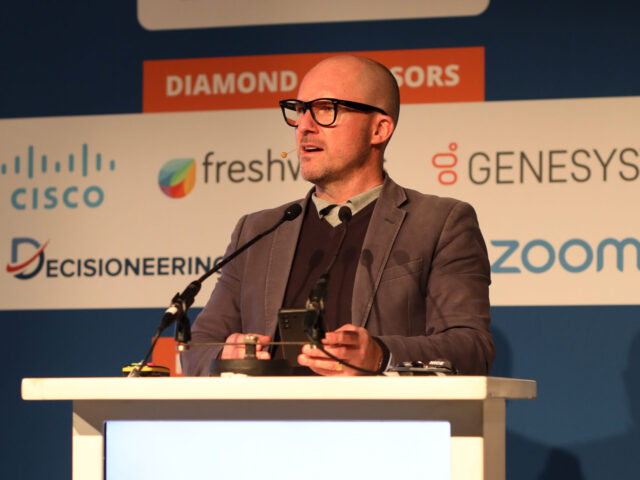
Dominic Wilhelm

Co-founder & Executive Director

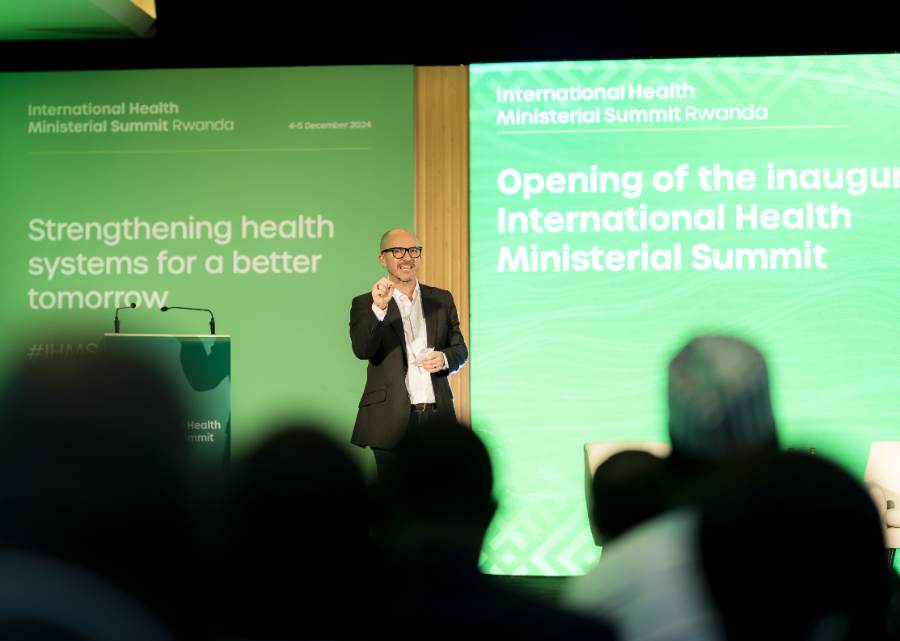
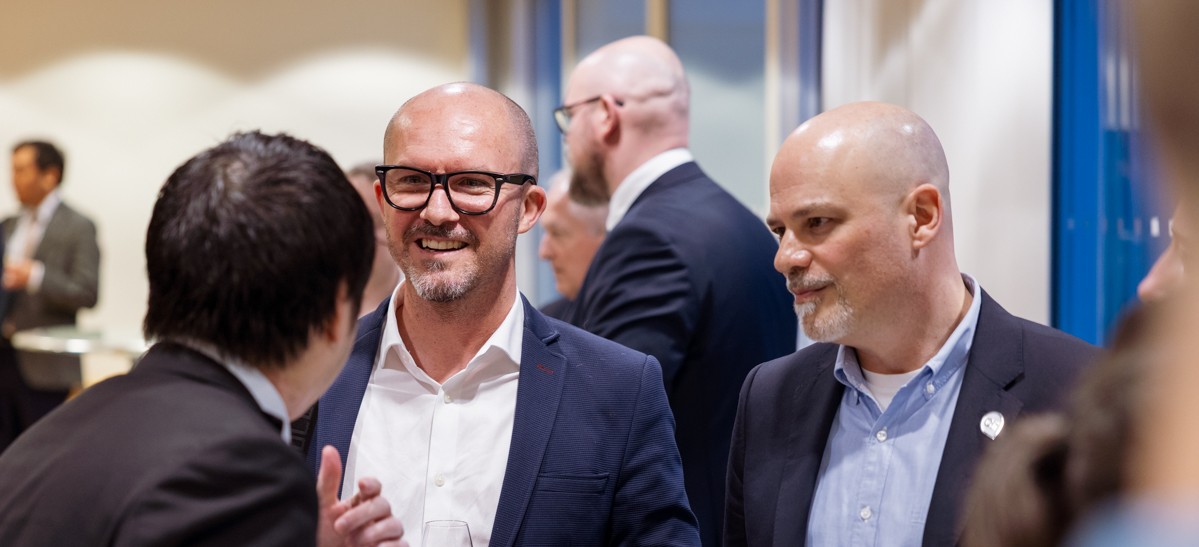
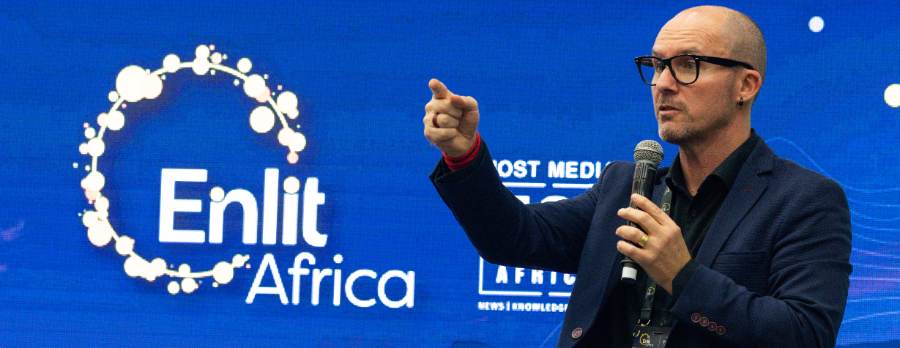
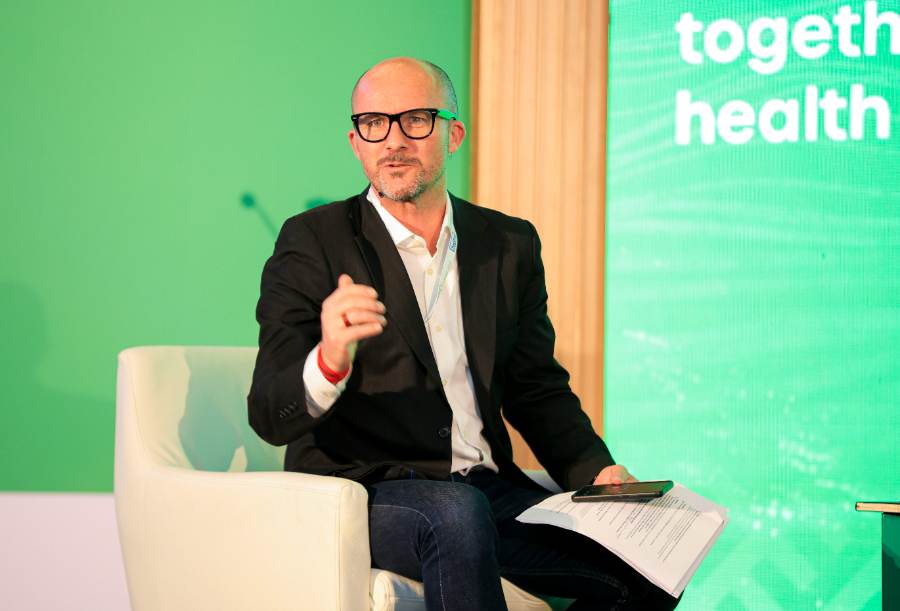
Dominic has advised leaders, organisations, and governments across Africa, Europe, the United States, and Asia. His work bridges rigorous trust research with real-world application, helping leadership teams translate insight into sustained performance. He is a trusted advisor and a speaker invited by governments, global institutions, and internationally recognised organisations.


Bruce Robinson

BOARD MEMBER

Deep experience in leadership development, organisational coaching, and strategic growth across international training and professional services environments. Supports TGTP with strategic counsel and executive coaching.


Murad Ebrahim

BOARD MEMBER

Senior financial and governance leadership shaped by more than two decades across finance, media, and complex multi-entity organisations spanning Africa-based and international operations.


David Ashdown

BOARD MEMBER

Over twenty years of executive leadership experience building and scaling organisations across emerging markets, particularly in Africa. Background in convening, leadership coaching, and systems-level delivery.


Tracey Gersowsky

Group Director, CX & Operations

Deep experience in leadership development, organisational coaching, and strategic growth across international training and professional services environments. Supports TGTP with strategic counsel and executive coaching.


Liezel Killingbeck

HR DIRECTOR

Leads people strategy with extensive experience across human resources, organisational development, and behavioural insight spanning multiple sectors and geographies.


Shane Czapski

IT Manager

Leads TGTP’s technology and security infrastructure with strong experience in enterprise IT, cybersecurity, and business continuity across international teams.


Daniel Shaw

Business Enablement

Supports TGTP’s business enablement and organisational development work, drawing on experience in learning design, facilitation, market research, and business development.


Jason Manganyi

Data Analytics

Leads data analytics supporting the Trust Equity Index (TEi), with experience spanning research, business intelligence, and quantitative analysis.


Errol Bryce

COMMERCIAL DEVELOPMENT

Errol brings decades of commercial experience to the team, supporting growth through business development, partnerships, and commercial strategy, grounded in trustworthiness. He has extensive experience in live B2B events, media, and digital products across Africa’s most dynamic sectors, with a strong track record of building lasting commercial relationships.


Amelia Kuhn

MARKETING OPERATIONS & DATA

Guides our marketing operations and data capability, helping ensure that our strategies, systems, and decision-making are grounded in evidence. She translates complex data into practical insight, supporting the measurement of impact, the refinement of strategy, and the effective coordination of TGTP’s marketing and operational activities.

Kim Jansen

SNR. WEB ADMIN

Kim is Senior Web Administrator, helping oversee the development, maintenance, and smooth running of our digital presence and web infrastructure, grounded in trustworthiness. She assists with content management, platform performance, and the day-to-day running of TGTP’s digital ecosystem, helping ensure a consistent, effective, and user-centred online experience.


Darika Singh

WEB DEVELOPER

She brings a strong blend of technical and creative expertise to the team, supporting the development of user-centred digital platforms grounded in trustworthiness. She is an experienced web developer and designer with expertise in custom websites, WordPress, front-end development, API integrations, and UX/UI. Her background spans HTML, CSS, Java, Python, PHP, JSON, Adobe Creative Suite, and AI-enabled tools.

TGTP works closely with venture partners, the VUKA Group, enabling scaled delivery, convening, and engagement capabilities across multiple geographies.

07

Media


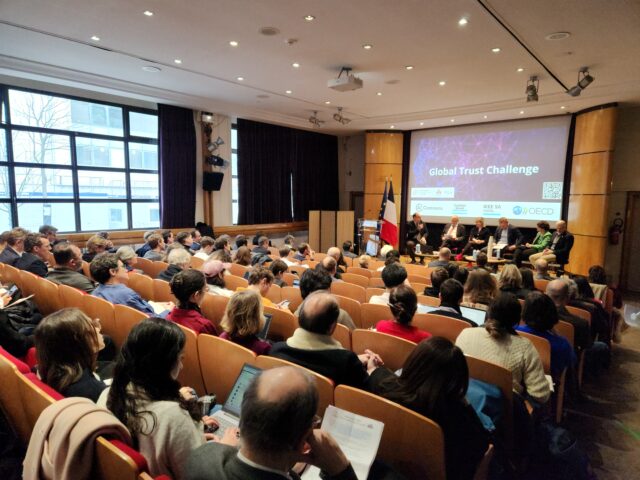
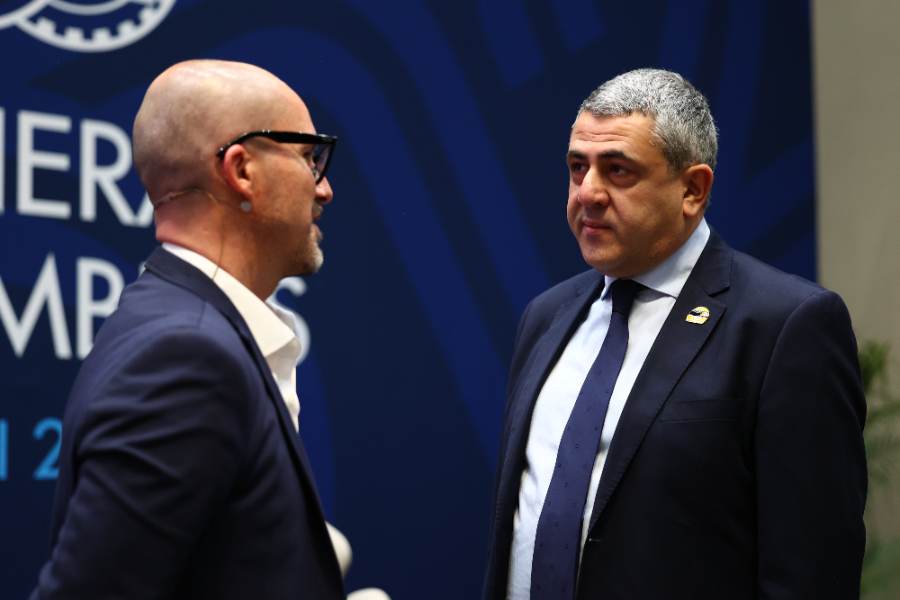
This section brings together selected media from conversations, workshops, retreats, dialogues, and public engagements across geographies.


It includes podcast conversations on trustworthiness and leadership, a gallery of work in practice, and selected press.

Conversations on trust, leadership, and the conditions that shape how organisations and societies perform. New episodes coming in 2026.

Trust as a Strategic Asset: Where the Research Lands

Dominic Wilhelm

Coming 2026

The Anatomy of Institutional Trust

Leadership Series

Coming 2026

What the TEi Reveals That Annual Surveys Cannot

Research Series

Coming 2026

From Black Hole to Thrive: A Leadership Journey

Case Series

Coming 2026

Trust at National Scale: Lessons from Government Engagements

Public Sector Series

Coming 2026

08

Survey


Understand your trust and performance dynamics and experience how trust changes everything.

The TGTP self-assessment survey is a short, structured instrument grounded in the Trust Equity Index (TEi). It takes approximately fifteen minutes to complete and is designed for leaders, senior teams, and organisations who want to understand where they currently stand on trust and performance.


On completion you will receive a confidential, personalised report that identifies your trust and performance profile, surfaces key constraints, and outlines where targeted intervention would create the most significant impact.


There is no obligation. The report is yours.

What you will receive

  • A Trust & Performance Profile placing your organisation on the TEi landscape
  • Identification of the primary constraints on your trust and performance
  • Indicative pathways for intervention and improvement
  • A confidential one-page summary for senior leadership
Request the survey

Currently available by request. Contact us to receive your survey link and access instructions.

09 Contact

This is where
it starts.

The work is best understood in context.

ADDRESS

Ground Floor, Ebden House
Belmont Park, Rondebosch
Cape Town, 7700
South Africa

NEWSLETTER

Receive updates from TGTP

EMAIL
path@theglobaltrustproject.one

TELEPHONE
+27 21 700 3500

WEB
theglobaltrustproject.com